Overview
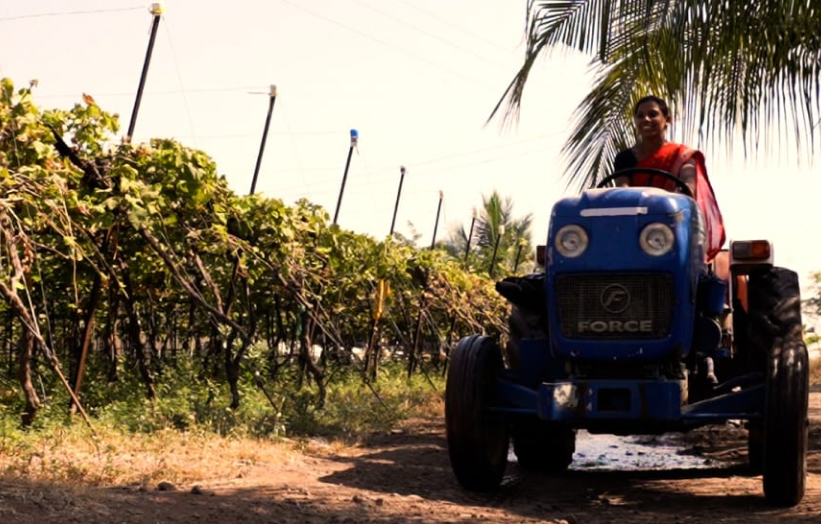
We help farmers move from poverty to prosperity by offering science-based guidance from soil testing to market access. We support farmers in the drought-prone Mann Desh region. The population of the area is primarily nomadic shepherd tribes long excluded economically and socially. Women are empowered as “Soil Sakhis” to drive soil testing, champion technology, and share scientific knowledge, strengthening both climate resilience and gender equality. Our interventions, village workshop trainings, exposure visits, and linkages, promote sustainable practices that raise yields, lower costs, and unlock new opportunities.
Focus on Soil
Farmers have traditionally relied on traditional practices, even though agriculture is a highly technical and scientific field. By focusing on soil, we intervene at the very beginning of the crop cycle, where the foundation of productivity is set. Strengthening soil health through scientific knowledge not only supports better yields and climate resilience, but also creates a holistic model that links soil conservation, sustainable livelihoods, and women’s empowerment from start to finish. Since Inception, 21,434 farmers have been supported across 5 districts and 239 villages.
Our Programs
Soil Sakhis
Mann Deshi’s network of 10 trained “Soil Sakhis” is driving climate-smart agriculture at the grassroots level. These rural women leaders are trained in scientific soil sample collection, sustainable farming practices, and the use of technology in agriculture. Acting as trusted community mobilizers, they encourage farmers to adopt soil testing and data-driven cultivation methods that improve soil health, reduce excessive chemical use, and lower carbon emissions. Soil Sakhis also bridge the gap between farmers and Mann Deshi’s soil laboratory by coordinating sample collection and analysis. By empowering women as climate leaders, the initiative promotes gender equality while creating low-input, high-impact solutions for sustainable agriculture and improved farmer livelihoods.
Agriculture and Soil Testing Centre
Mann Deshi Foundation advances sustainable agriculture through its state-of-the-art Agriculture and Soil Testing Laboratory, where skilled technicians conduct rigorous scientific analysis to support farmers with data-driven insights. The laboratory performs comprehensive testing across 14, 18, and 21 critical soil parameters, enabling a detailed understanding of soil fertility, nutrient composition, pH balance, and other factors that directly impact crop productivity and plant health. At the center of this ecosystem are the Soil Sakhis, who bridge the gap between farmers and science by collecting and transporting soil, water, leaf, and fertilizer samples for analysis. This empowers farmers to optimize fertilizer use, improve crop planning, reduce input costs, increase yields, and adopt sustainable agricultural practices.
Cattle Lab
Launched in May 2025, the Mann Deshi Cattle Lab addresses the critical need for accessible and reliable veterinary diagnostics in rural communities. Serving dairy buffaloes, cows, sheep, and goats, the lab provides essential diagnostic services including Complete Blood Count (CBC), Kidney Function Tests (KFT), Liver Function Tests (LFT), and urine analysis to detect infections, anaemia, organ disorders, and mineral deficiencies. The initiative also conducts farmer awareness sessions promoting timely testing for early disease detection and prevention of livestock deaths. In less than a year, the laboratory has successfully conducted 676 tests, strengthening rural animal healthcare systems and improving livestock productivity and farmer livelihoods.
Expert Advisory
A crucial intervention of the agriculture program is providing marginalized farmers with access to expert advisory in their mother tongue or the local languages at their farm. Our field team, composed of Soil Sakhis and Expert Agronomists visit farms to diagnose if the crop is facing a pest attack or disease. With the help of the soil test report and crop schedules expert advisory in a timely manner. This ensures that the pest attacks and plant diseases do not affect the yield and income of the farmer.
Sheti Shala Training Workshops
Rising temperatures and unseasonal rainfall have increased pest attacks and crop diseases, exposing farmers to climate-related challenges with limited prior experience. Mann Deshi’s Sheti Shalas address this gap by providing farm-level, science-based training and crop health guidance led by agricultural experts. These focus-group workshops promote peer learning, practical problem-solving, and informed decision-making among farmers. Trainings cover critical areas such as seed germination, seed treatment, crop-specific management for mango and pomegranate cultivation, silage preparation, dairy management, organic fertilizers, vermicomposting, and food waste management.
Exposure Visits
Exposure visits to agricultural research centers and agri-industries provide farmers with access to the latest innovations, techniques, and products in the ecosystem. Over the year, crop-specific farmer conferences were organized to share knowledge on pest management, disease control, and best practices for cultivating export-oriented fruits such as pomegranate, grape, and mango. These initiatives give farmers first-hand exposure to new developments in the sector and inspire them to adopt modern technologies and practices after interacting with successful role model farmers.
Agriculture Technology
At the heart of Mann Deshi’s climate-smart agriculture model are the Soil Sakhis, grassroots women leaders driving the adoption of sustainable farming technologies and climate-resilient practices. They promote eco-friendly solutions such as bio-gas units, Jiv Amrut, soil sensors, weather forecast stations, and Trichogramma-based pest management to reduce costs, improve soil health, and strengthen farmer resilience. Trichogramma alone reduces pesticide use by 30–70%, improves produce quality by 20–40%, and increases yields by 10–30%, accelerating the transition toward sustainable and self-reliant agriculture.
Advance Course on Horticulture for Women Farmers
Maharashtra has 18.96% of India’s rural female cultivators and women are the backbone of horticulture but remain in low-return, labour-intensive roles. They have limited access to knowledge, markets, technology & land rights and low decision-making power across the value chain. Our Aim is to establish a Women in Horticulture Learning Center at Mann Deshi Foundation enabling women to transition from farm labourers to farm leaders. The course is designed to be conducted over 7 months where each week 2-hour classes + field learning will be provided for a cohort of 20–30 women farmers.
Market Linkage
Mann Deshi strengthens farmer livelihoods through strong market linkage initiatives that ensure farmers receive fair value for their produce. At the Mann Deshi Mahotsav held in Mumbai in February 2025, 32 farmer stalls generated a total revenue of INR 25 lakhs within five days, with each farmer earning an average of INR 78,821. Since March 2025, farmers’ produce has also been sold regularly through weekly markets at Nariman Point, Dadar, and Vile Parle in Mumbai, facilitating the sale of over 60 tonnes of organic produce. Mann Deshi has further expanded market access through export linkages, successfully exporting 2 tonnes of mangoes to international and domestic markets.
Soil Sakhis
A network of trained rural women leaders driving climate-smart agriculture at the grassroots, bridging farmers with Mann Deshi’s soil laboratory and promoting low-input, high-impact sustainable practices.
Agriculture and Soil Testing Centre
A state-of-the-art lab testing soil, water, leaf and fertilizer samples across 14, 18, and 21 parameters — empowering data-driven cultivation, lower costs, and higher yields.
Cattle Lab
Veterinary diagnostics (CBC, KFT, LFT, urine analysis) for dairy buffaloes, cows, sheep, and goats — 676 tests conducted in under a year.
Expert Advisory
On-farm advisory by Soil Sakhis and Agronomists in the local language — timely pest/disease diagnosis tied to soil test reports and crop schedules.
Sheti Shala Training Workshops
Focus-group, farm-level workshops on seed treatment, mango/pomegranate management, silage, dairy, organic fertilizers and vermicomposting.
Exposure Visits
Visits to research centers, agri-industries and crop-specific conferences for pomegranate, grape and mango cultivators.
Agriculture Technology
Bio-gas, Jiv Amrut, soil sensors, weather stations and Trichogramma-based pest management — pesticide use down 30–70%, yields up 10–30%.
Horticulture Course for Women
A 7-month learning program with weekly classes and field learning for cohorts of 20–30 women farmers, covering financial literacy, AI tools and access to credit.
Market Linkage
Mumbai weekly markets (Nariman Point, Dadar, Vile Parle), Mann Deshi Mahotsav, and export linkages — 60+ tonnes of organic produce sold, 2 tonnes of mangoes exported.